Balustrade, curtain wall, window and stone cladding design and certification — plus NCC Performance Solutions for external cladding systems that fall outside the Deemed-to-Satisfy provisions. Registered Design Practitioner DEP0001529 (Facade).
Facade DPP & CPEng
Facade work crosses three of the trickiest NCC clauses (F3, B1, C2), three Standards (AS 1288, AS 4284, AS 5146.3), the F3V1a risk assessment table and the DBPA design declaration regime. Getting any of them wrong stops construction. Here's the failure pattern we keep cleaning up.
An architect specifies a cladding system that doesn't have a CodeMark certificate or a clear Deemed-to-Satisfy pathway. The certifier flags it, work stops, and someone scrambles to engage a Performance Solution engineer at the eleventh hour. We document the PS pre-construction so the certifier never raises the flag.
Generic balustrade certificates with no AS 1170.1 line-load calculation, no glass design to AS 1288, no fixing capacity check. Certifiers are increasingly rejecting these — and they should.
Cladding zone pressures used for everything, ignoring the Kl local pressure multiplier for windward edges (Kl=1.5) and side edges (Kl=2.0). Cladding rated to 2.5 kPa, actual peak local pressure 3.8 kPa. Reads compliant on paper, fails in service.
Comprehensive facade engineering covering everything from a single balustrade certificate to a full Performance Solution report for a 12-storey apartment building.
NCC Performance Solutions for external cladding systems that fall outside the Deemed-to-Satisfy provisions — under the A2G2 Expert Judgement pathway, with F3V1a risk assessment and project-specific wind pressures.
Structural and weatherproofing certification of unitised and stick-built curtain wall systems to AS 4284 — including SLS deflection limits, ULS structural capacity and water-penetration test verification.
Compliance certification of glazed window and sliding door systems — wind loading to AS 1170.2, glass selection to AS 1288, water penetration to AS 2047, and Performance Solutions for windows in wet areas.
Balustrade design and certification to NCC D2.16, AS 1170.1 line loading and AS 1288 glass — for residential, commercial, podiums, balconies and pool surrounds.
Mechanical fixing design, substrate verification and seismic restraint design for natural stone, engineered stone and porcelain panel cladding systems — with project-specific wind and seismic loading.
Independent facade audits of existing buildings — cladding combustibility review, weatherproofing performance assessment, remediation strategy development for legacy stock.
From the first set of architectural drawings to the final design declaration — a clear, staged engineering process.
Tell us about the project. We'll review the documentation, define a fixed-fee scope of works and turn around a quote — usually within 24 hours.
Our engineers carry out the design, calculation, inspection or assessment to the relevant Australian Standards, NCC provisions and project-specific requirements.
We deliver clear, signed engineering documentation — drawings, specifications, compliance certificates or reports — built to satisfy certifiers, councils, insurers and the courts.
Construction support, certifier RFIs, site inspections, post-issue revisions — we stay engaged through to project completion, not just until the document is issued.
A snapshot of the kinds of facade engineering we deliver across NSW, VIC and QLD.
Curtain Wall · CBD Sydney
A developer's curtain wall sub-contractor needed structural and weatherproofing sign-off on a unitised system for a CBD office redevelopment. The original engineer's package had AS 4284 test data missing for the head-jamb interface. We picked up the package, ran the gap analysis, and worked with the manufacturer to obtain the missing CWCT-equivalent test data — all without re-mobilising the test rig.
Performance Solution · Healthcare
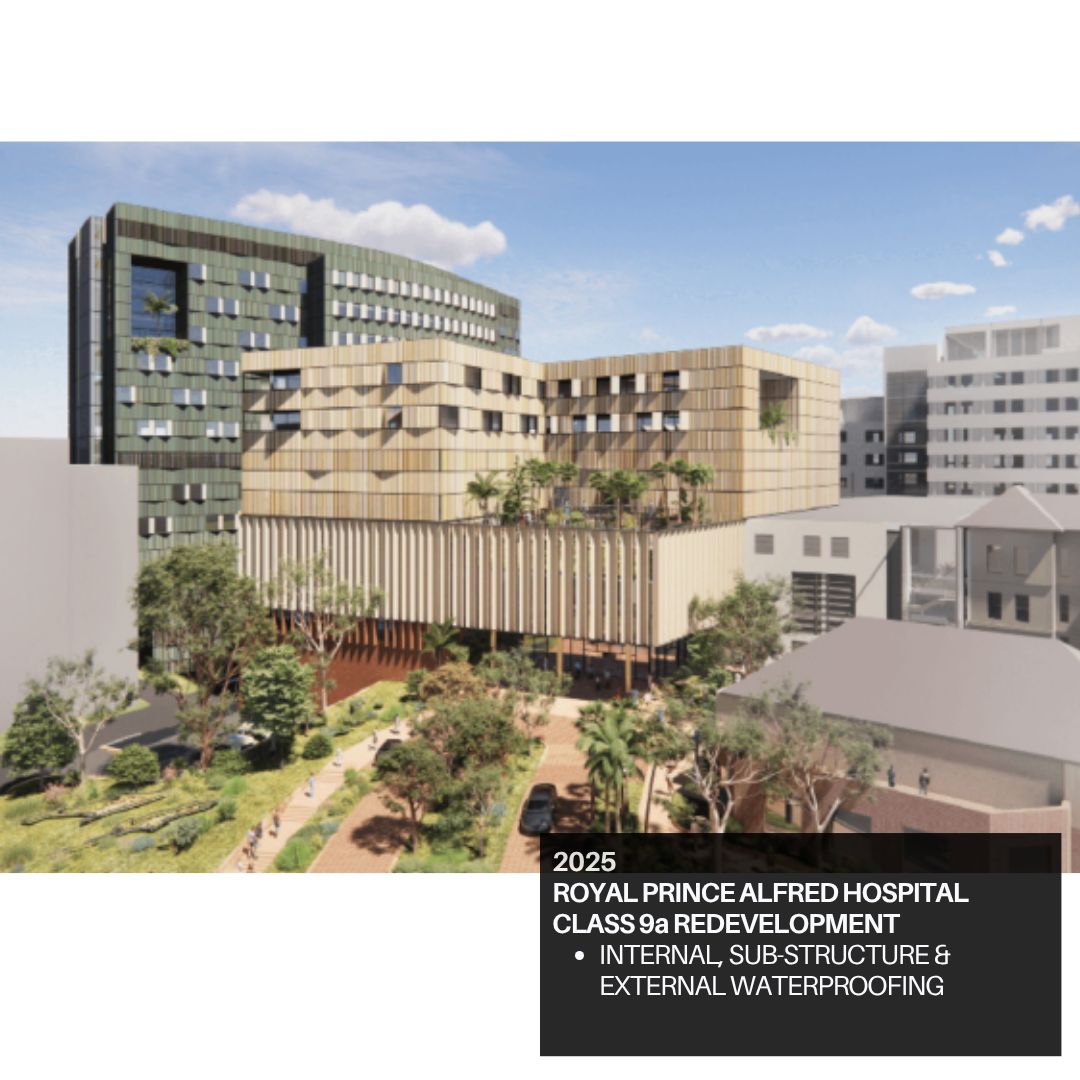
A healthcare-fitout architect specified a BASROC mineral wool ETICS render system for a non-DtS facade scope. The certifier asked for an A2G2 Performance Solution covering F3P1 weatherproofing. We worked the system through F3V1a, verified the project ULS wind pressures (including local Kl) sat under the CodeMark CM70139 Rev 3 limit, and issued the PS report against the cert's three conditions.
Balustrade · Vaucluse
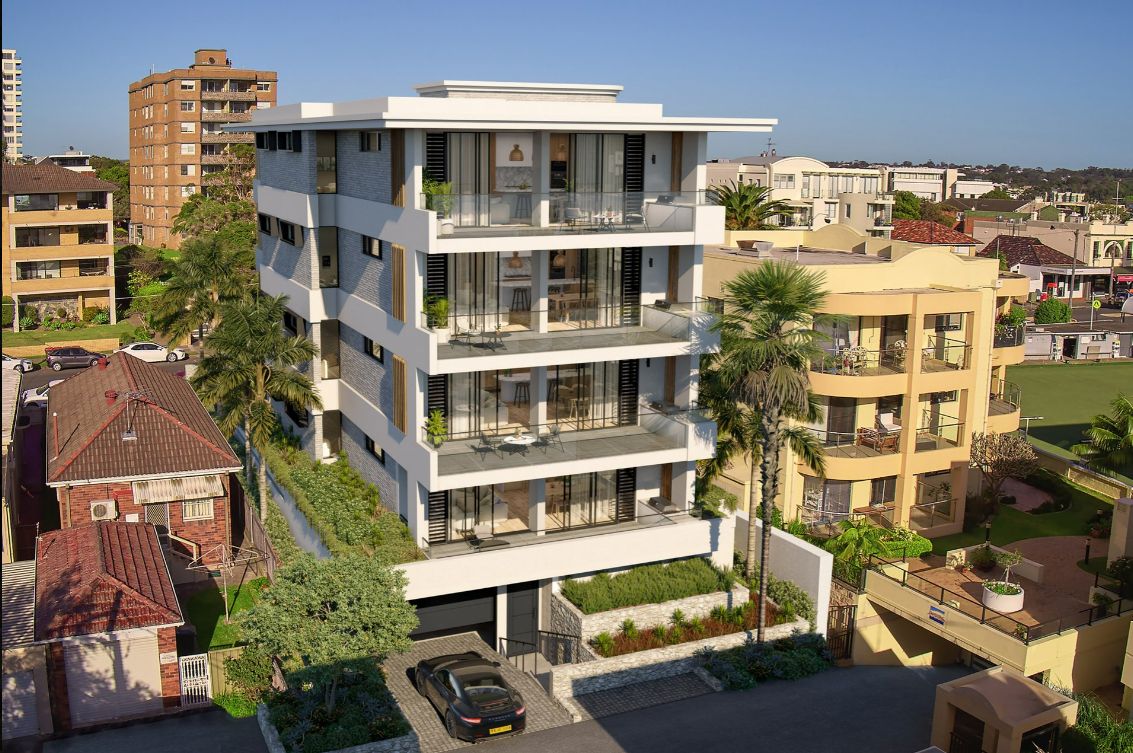
A Vaucluse cliffside residence required a 24 m run of frameless glass balustrade — exposed C2 wind class, no top rail per the architect's brief. We sized the glass to AS 1288 with full impact loading, designed the embedded shoe channel for the AS 1170.1 line load, and verified fixing capacity into the suspended slab below.
Stone Cladding · St Ives
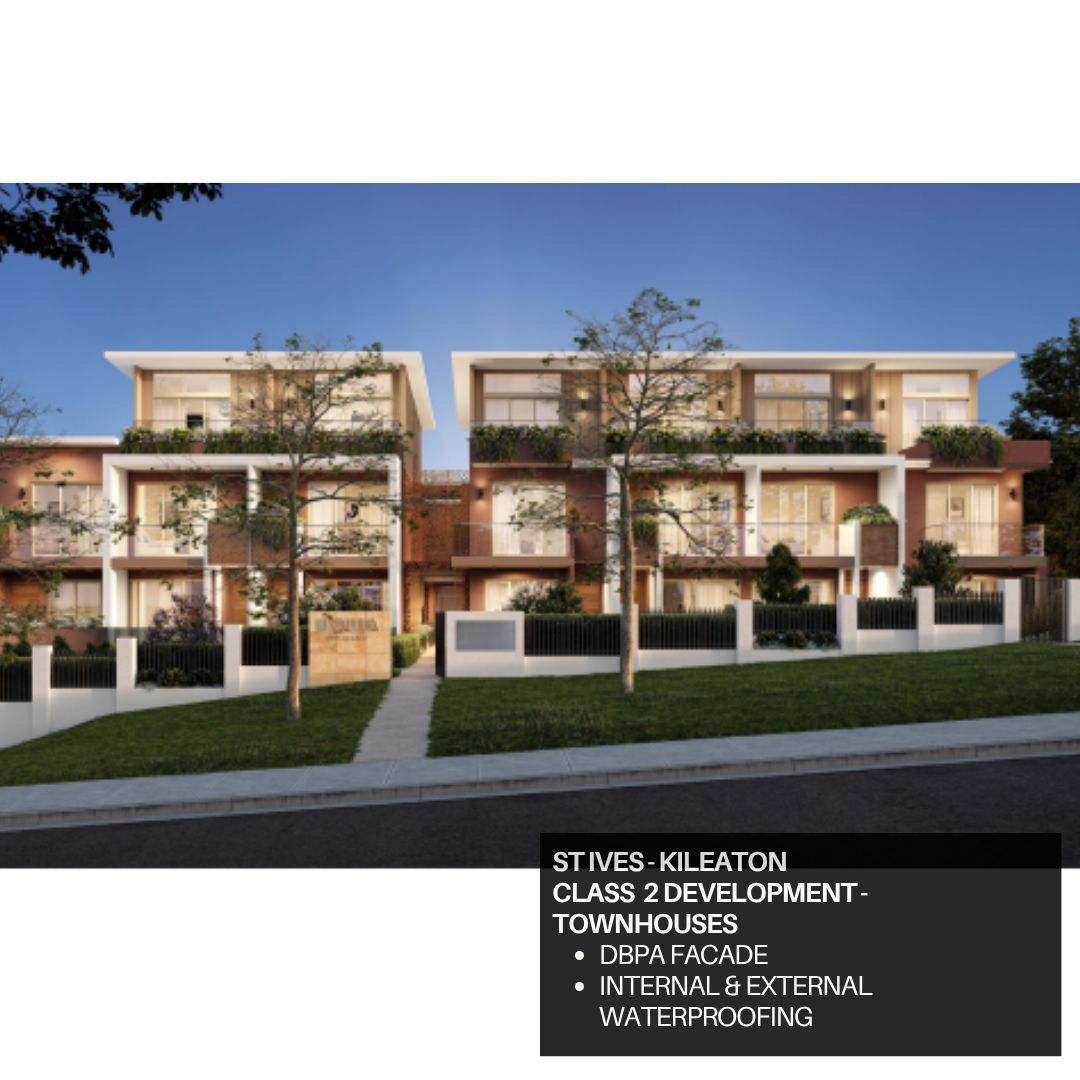
A high-end apartment build adopted a 30 mm engineered stone veneer panel on a sub-frame — outside the manufacturer's DtS substrate scope. We designed the sub-frame, restraint locations, and seismic ties for the project's wind and earthquake actions, with bond-strength verification testing on site.
From owner-builders doing one balustrade to developers delivering 200-unit facade packages.
Common property scopes, capital works planning, defect investigations and compliance certification for Class 2 buildings.
Design declarations, Performance Solutions, certification packages and staged inspections — built to satisfy the certifier on the first submission.
Specialist engineering input on facade, waterproofing and structural elements where Deemed-to-Satisfy provisions don't apply.
Practical engineering advice on renovations, defects and pre-purchase risk assessments — translated out of jargon.
Any time the cladding system you've specified can't be matched to a Deemed-to-Satisfy provision in NCC Vol 1 (typically F3D5, AS 3700, AS 4773, AS 5146.3 for AAC, or a current CodeMark certificate). Common triggers: HardieTex blueboard render, BASROC mineral wool, render-on-FC, Equitone NV3, non-CodeMark composite panels. If unsure, send us the proposed system and we'll confirm in writing within 24 hours.
Yes. Jimmy Tran is a Registered Design Practitioner under DEP0001529 in the Facade Engineering class. We lodge declarations directly via the NSW Planning Portal — for full PS reports, curtain wall packages, balustrade certificates and stone cladding systems.
We use the AS 1170.2 site-specific wind procedure (V_R for the regional speed, multipliers M_d / M_z,cat / M_s / M_t), and crucially apply the local pressure factor Kl from Table 5.4 — typically Kl=1.5 on windward edges (WA1 zone) and Kl=2.0 on side edges (SA2 zone). Most facade failures we see in service trace back to using general-surface pressures and ignoring Kl.
Yes — this is one of the most common scopes we see. AS 3740 Deemed-to-Satisfy prohibits glazing in wet areas under certain conditions. Where the architectural brief requires a window over a bath or in a shower zone, we document the PS pathway under F1V1, with specific waterproofing detailing at the sill and reveal.
Typical timing: drawing prep (1–2 days), wind assessment (1 day), F3V1a risk (1 day), PS report (3–5 days), drawing markup and references (1–2 days). Most jobs ship inside 2 weeks from brief. Faster on simple single-system scopes.
Yes. We carry out post-Grenfell-style facade audits for owners corporations and councils — cladding identification, combustibility assessment, remediation strategy and cost banding. For NSW, this includes Cladding Product Safety Panel (CPSP) reviews and remediation orders under the Building Products (Safety) Act.
Yes. We have offices in Sydney (Surry Hills), Melbourne (Cremorne) and the Gold Coast (Bundall), and regularly carry out facade work across all states. For interstate work travel costs are quoted separately.
A CodeMark certificate is a third-party product-level certification — it confirms a specific system meets a stated NCC clause when used within stated conditions. A Performance Solution is a project-level engineering assessment — it demonstrates the project's actual conditions meet the NCC Performance Requirement. A CodeMark cert often supports a Performance Solution: the PS verifies that the project's wind pressures, risk score and detailing fall within the CodeMark's conditions of use.